

Neurocosmetics: The Science Behind Skin and Brain Communication
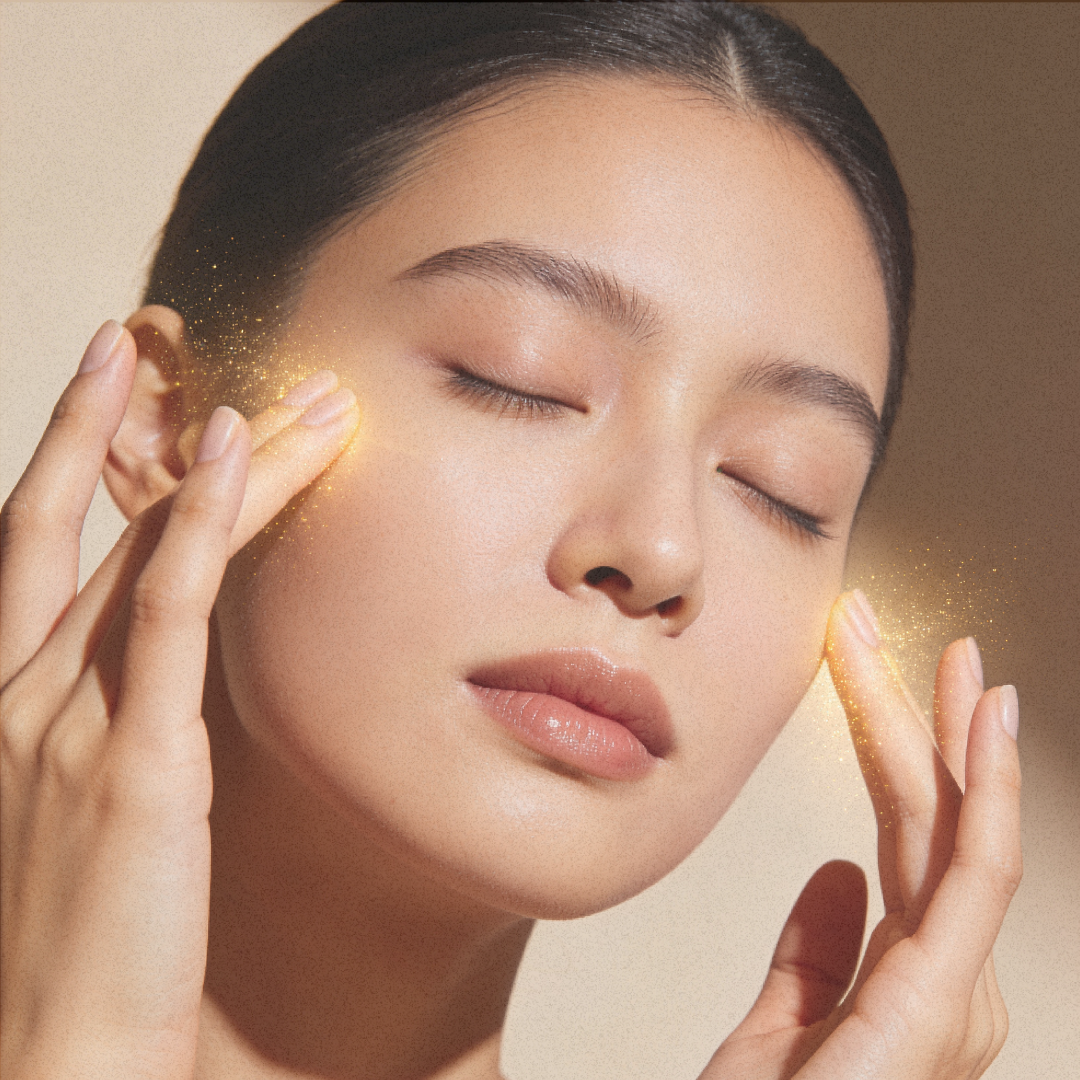
Neurocosmetics are topical formulas developed around one fact of anatomy: the skin is wired. It carries sensory nerve endings, receptors and signalling molecules belonging to the same system as the brain, and it talks back. A neurocosmetic is a product formulated with that conversation in mind, rather than only with the surface it sits on.
That is the short answer. The longer one is more interesting, and it includes the parts the category tends to leave out.
The skin is a sensory organ, not a surface
A shared embryonic origin
Skin and the central nervous system develop from the same embryonic tissue. In the third week of development the ectoderm divides. One part folds inward and becomes the brain and spinal cord. The other becomes the epidermis. They are, quite literally, separated siblings.
What that means day to day
That shared origin is why skin is not a passive wrapper but an organ dense with nerve endings, and why it answers to internal states as readily as to weather or cleanser.
I trained as a psychologist. For most of my working life I was interested in what people feel and how it shows up in the way they move through the world. What I did not expect was how plainly it shows up on skin. Your skin is not simply reacting. It is communicating.
What stress actually does to the skin
Cortisol and the barrier
When stress becomes chronic, cortisol stays elevated. The consequences on skin are specific rather than vague. The barrier holds water less well, transepidermal water loss rises, inflammatory signalling increases, and skin becomes reactive to things it tolerated a month ago.
How it shows up
Most people notice the result before the cause. Tightness that was not there last month. A moisturiser that starts to sting. Redness that arrives with a deadline and leaves with it.
How is a neurocosmetic different from ordinary skincare?
The second question
Conventional skincare is formulated for what skin lacks. Water, lipids, antioxidants, protection. That reasoning is sound, and a good neurocosmetic does all of it too.
The difference is a second question asked alongside the first: how is this skin behaving, and why. A formula for skin that reacts to everything is not a weaker version of a formula for skin that tolerates everything. It is chosen differently.
What gets left out
Fewer actives, at concentrations skin can accept indefinitely, on a lipid base that lets the barrier recover rather than one that merely feels rich. In practice the difference shows up in what a brand refuses to include, not in what it adds.
The best evidenced route is not the one you would expect
Barrier disruption moves nerve endings
If you ask which cosmetic ingredient has the strongest published link to the skin's nervous system, the honest answer is not an exotic peptide. It is the barrier itself.
When the barrier is disrupted experimentally, nerve growth factor rises, the guidance molecule Sema3A falls, and sensory nerve fibres grow further up into the epidermis than they should. Skin with nerve endings closer to the surface is skin that feels more. Emollients reverse it: in the same model, emollient treatment reduced both the number of fibres penetrating the epidermis and NGF levels.
The human trial data
A four week randomised placebo controlled trial in 39 women with sensitive skin found an emollient cream reduced lactic acid sting scores against placebo. The authors described sensitive skin as a barrier dependent sensory response rather than a skin type.
A separate cross sectional study found something worth knowing if you buy skincare. Stinging tracked barrier integrity, measured as water loss, not water content. Hydration, sebum, elasticity and pH showed no correlation with sting scores.
Why lipids, and not humectants
The practical conclusion is unglamorous. Lipids carry this effect. Humectants do not. It is why argan oil is the most concentrated active in all three of our formulas, second only to water, rather than a supporting ingredient listed politely near the end.
What the research shows, ingredient by ingredient
Bakuchiol
The strongest human evidence in our range, and it is a sensory result. In a randomised double blind trial published in the British Journal of Dermatology in 2019, 44 participants used bakuchiol or retinol for twelve weeks. Both improved wrinkles and pigmentation comparably. The difference was tolerance: the retinol group reported significantly more facial scaling and stinging.
The limits belong in the same paragraph. One trial, 44 people, tolerability self reported rather than measured with a validated assay, and bakuchiol is a documented contact allergen in published case reports. Gentler than retinol in a head to head comparison. Not inert.
Tripeptide-1, also called GHK
A 2018 review in the International Journal of Molecular Sciences describes this copper binding peptide upregulating hundreds of neuron related genes and raising neurotrophic factors in laboratory work. It is the most neurologically interesting molecule we use. It is also laboratory work, which is exactly why you will not find us claiming it does that on your face.
Witch hazel
A 2024 screen of 1,444 botanical extracts in Communications Biology identified Hamamelis as a leading hit for activating Kv7 and TREK-1 channels, which quieten pain sensing neurons. The caveat matters: that work used bark, and most cosmetic extracts, ours included, are made from leaf, which has a different chemistry.
Hesperidin methyl chalcone
Mechanistically the most on target botanical in our eye contour, with published work pointing at TRPV1, the receptor that registers heat and irritation. Every one of those studies dosed systemically in animals. A well grounded hypothesis about a topical ingredient, not a demonstrated topical effect.
What neurocosmetics is not
Laboratory results are not product claims
Ingredients that act on neurons in a dish do not necessarily reach neurons through intact skin. Research done by feeding a compound to a mouse says nothing about a cream. A molecule with a famous name in neuroscience does not inherit that reputation when it is added to an emulsion at a fraction of a percent.
The ingredients we do not dress up
Several ingredients in our formulas have no neurological credential at all, and we do not pretend otherwise. Hyaluronic acid holds water. Kakadu plum is a vitamin C source. Shea butter is an emollient. They earn their place on what they actually do.
If a brand tells you a cream reduces anxiety, ask where that was measured and in which species. We hold ourselves to the same question.
How to build a neurocosmetic routine
Fewer products, chosen better
Neurocosmetics are not about complexity. If anything they argue for less. Favour consistency over intensity, because a formula you can use every day will always outperform a stronger one you have to stop. Look for a base built on lipids rather than one built on water and marketing.
The two minutes at the end
Apply it slowly. Two unhurried minutes at the end of the day is not a decorative flourish. Touch is processed by the same system this entire article is about.
Neurocosmetics in skincare: reading a label
The spellings all mean the same thing
You will see neurocosmetics, neuro cosmetics as two words, and neurocosmetic as a singular adjective. The category is young enough that nobody has settled the spelling. They all point at the same idea: a formula designed around the fact that skin carries nerve endings and answers to them, rather than around the surface alone.
What a label can honestly tell you
Very little, is the short answer. There is no legal definition of a neurocosmetic, no standard a product has to meet, and no regulator checking the word. It describes an intention behind a formula, not a tested property of it.
What a label can tell you is the practical part. Whether there is fragrance in it. How many actives are competing for the same skin. Whether it was built for skin that reacts, or built for skin that tolerates anything. Those three answers are worth more than the word on the front.
Where our products sit
Our neurocosmetic range is deliberately small, fragrance free where the skin is thinnest, and built around tolerance rather than around a long active list. We would rather you bought one thing that suits you than four that argue with each other.
Questions people ask
Can a cream change how I feel?
Not in the way the phrasing implies, and any brand claiming so is overreaching. What a cream can do is stop provoking skin that is already reactive, and support a barrier whose condition is measurably linked to how much that skin feels. The effect runs through the skin, not through mood.
Is neurocosmetics a real field or a marketing term?
Both, and the two are worth separating. The underlying science, cutaneous neurobiology, is an established research area with decades of literature on sensory nerve endings, neuropeptides and receptors in skin. The word neurocosmetics is a marketing label applied to products that borrow from it, sometimes rigorously and sometimes not.
Does it only suit sensitive skin?
It is most obviously useful for skin that reacts, but the barrier logic applies to everyone. Most people's skin becomes more reactive under sustained stress, poor sleep or a hard winter, whatever type they consider themselves.
How long before anything shows?
Barrier recovery is measured in weeks, not days. The sensitive skin trial above ran four weeks and the bakuchiol comparison twelve. Treat anything promising results in three days with suspicion.

A note from the co-founder
I came to this from psychology rather than chemistry, and that shaped what we chose to formulate for. Skin that reacts is rarely just dry. It is skin whose barrier has been compromised often enough that its nerve endings sit closer to the surface, belonging to someone who has had a difficult few months.
We built TandheM for that. Not to treat the nervous system, which a cosmetic cannot do, but to stop provoking it, and to give the barrier the material it needs to settle. Tolerance before strength, in every formula.
Tânia Ferreira Gança, psychologist and co-founder.
Read more
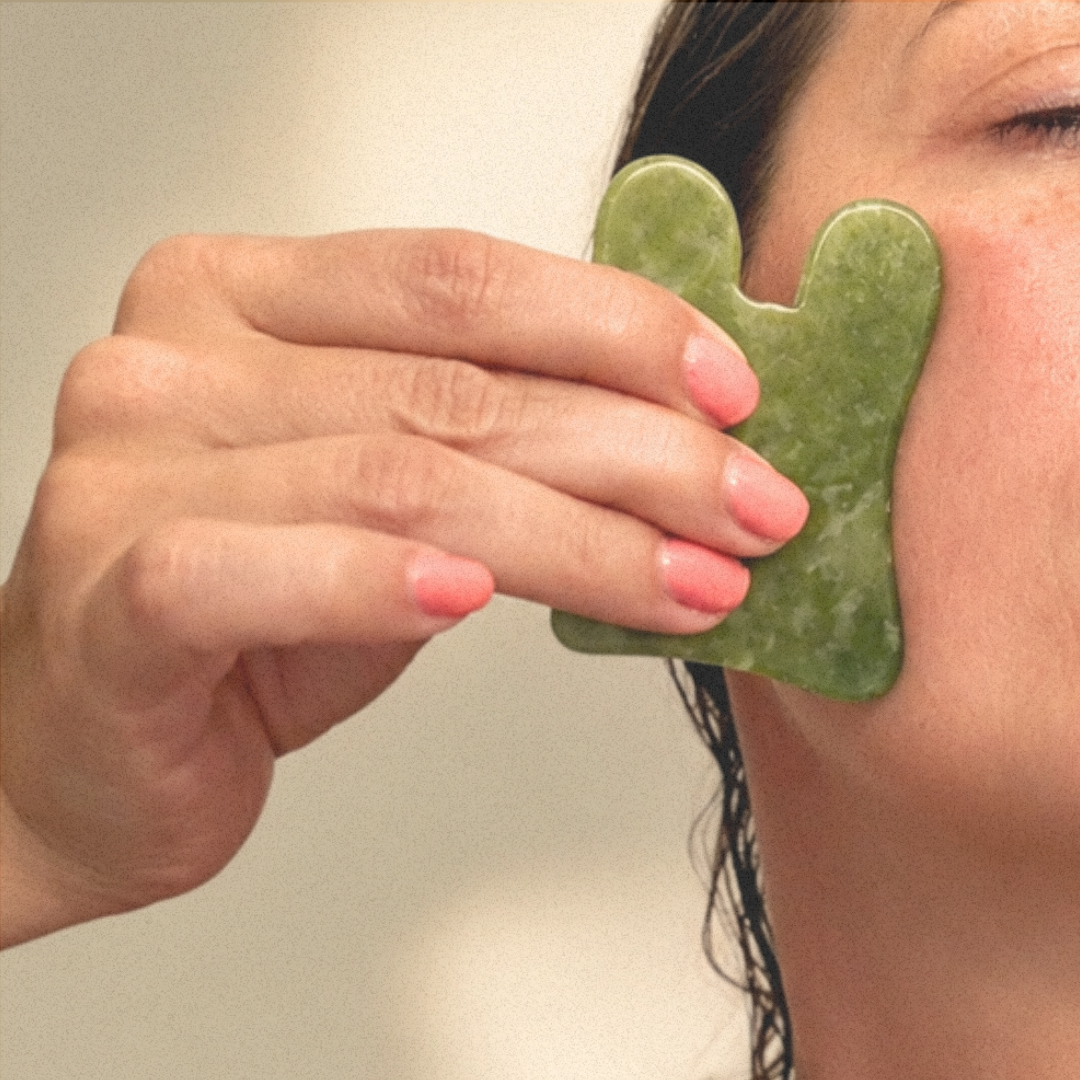
Mindful skincare is not about adding steps. It is about changing how you experience the ones you already have. Slower application, warmth between the hands, a few minutes of massage, and why the wa...

By Tânia Ferreira, psychologist and founder of TandheM. Skin often shows stress before we admit to it: tightness, redness, a dull or tired look. Here is what is going on underneath, and what a slow...


