

How to Repair Your Skin Barrier Naturally

How to Repair Your Skin Barrier Naturally
As a psychologist, I spend my working life listening to people describe stress. What surprised me, when we started TandheM, was how often the same people described their skin in the same words. Tight. Reactive. Unpredictable. Not itself.
Most of the time, what they are describing is a compromised skin barrier.
This is not a quick fix article. A barrier that took months to wear down does not settle in a weekend. But it does settle, and what you stop doing matters more than what you buy.
What the skin barrier actually is?
The skin barrier is the outermost layer of the skin, the stratum corneum. Picture a brick wall: flattened skin cells are the bricks, and a mix of lipids, fatty acids and cholesterol is the mortar holding them together.
That wall does two jobs at once. It keeps water in, and it keeps irritants out.
When the mortar thins, both jobs get harder. Water escapes faster than skin can replace it, and things that never used to bother you start to sting.
How to tell your barrier is compromised?
Tightness that does not go away
Skin feels tight after cleansing, and moisturiser only settles it for an hour or two. By six in the evening it feels tight again. This is the most reliable early sign, and the one people ignore longest.
Stinging from products you used to tolerate
A serum you have used for a year starts to prickle. Nothing about the product changed. The wall it is landing on did.
Dullness and rough texture
Light reflects off smooth skin. A disrupted surface scatters it, so skin reads dull and flat even when it is not dry in any obvious way. Makeup sits differently.
Redness that comes and goes
Warmth after a hot shower that takes longer than it used to to fade. Flushing after wine, or cold wind, or a stressful afternoon.
If you recognise three of these four, treat the next section as the important one.
What damages the barrier in the first place
Cleansing too hard, too often
Foaming cleansers with a high pH strip lipids along with the day. Twice a day with a high-foam cleanser is more than most skin tolerates long term, and double cleansing every night is more than almost anyone needs.
Actives stacked too fast
Retinoids, acids and vitamin C each ask something of the barrier. Introduced together, or introduced fast, they ask more than it can give. Most barrier damage I hear described started with a routine that got more ambitious over one month.
Weather, heating and hard water
Cold air holds less moisture, indoor heating holds even less, and the difference between them is what your face crosses every time you leave the house in winter. Hard water leaves mineral residue that keeps skin feeling filmy and tight.
Stress and sleep
This is the part that belongs to my other job. Skin is a sensory organ threaded with nerve endings, and it is not insulated from what the rest of you is going through. A hard fortnight shows up on the face, and not only because you slept badly.
The ingredients that matter
Plant oils
Argan oil is rich in oleic and linoleic acids and in vitamin E. It nourishes and softens, and skin feels comfortable rather than tight after it. In all three TandheM formulas there is more argan oil than anything except water, which makes it our highest concentration active.
Humectants
Sodium hyaluronate and sodium PCA draw water into the outer layer and hold it there. On their own they are not enough, because water they attract can leave again. They work when something sits above them.
Occlusive butters
Shea butter is the third ingredient in the Advanced Facial Cream, after water and argan oil. It slows the rate at which water leaves the skin, which is what keeps comfort lasting past the first hour.
Marine actives
Alaria esculenta, a brown seaweed extract, and Pseudoalteromonas ferment, a marine postbiotic, are both chosen for tolerance. The postbiotic sits in the Active Botanical Eye Contour because the eye area is the least forgiving skin on the face.
Gentle actives
Bakuchiol is a plant-derived alternative to retinol. It gives the kind of result people look to retinol for, fine lines that appear less visible and a smoother, more even-looking texture, without the irritation or the adjustment period. It is in the Pro-Aging Essential Face Serum.
A note on what you will not find in our formulas: ceramides. They are genuinely useful barrier ingredients and plenty of good products contain them. Ours work a different way, through plant oils and butters rather than synthesised lipids. We would rather tell you that than let you assume.
What to look for on a label
You do not need to memorise INCI lists, but four habits help.
Look at where an ingredient sits. INCI lists run in descending order of concentration down to 1%, so anything in the last third is present in small amounts. A brand leading with an active that appears second from last is telling you something.
Check what the first five are. Water, then oils, butters, humectants and emollients, is what a barrier-friendly formula looks like. Water, then alcohol denat, is not.
Treat fragrance as information rather than a verdict. Parfum is a permitted ingredient and most people tolerate it. If your skin is currently reactive, it is one variable worth removing while things settle, which is why we left it out of the eye contour entirely.
Ignore the front of the pack. "Dermatologically tested" has no fixed legal definition and tells you a test happened, not what it found. "Hypoallergenic" is not a regulated term either. The ingredient list is the only part of the packaging that has to be true.
What to stop doing for two weeks
More useful than anything you can buy:
-
Stop all acids and synthetic retinoids. All of them, not most of them.
-
Cleanse once a day, at night, with something that does not foam.
-
Use lukewarm water. Hot water feels good and costs you lipids.
-
Stop exfoliating, including the gentle physical kind.
-
Apply moisturiser to damp skin, within a minute of cleansing.
-
Change nothing else. Two weeks of one routine tells you more than two weeks of four.
A simple routine while skin settles
Morning: rinse with lukewarm water, no cleanser. Pro-Aging Essential Face Serum (link), then Advanced Facial Cream (link) on slightly damp skin. Sunscreen.
Evening: a non-foaming cleanser. Serum, then cream. Active Botanical Eye Contour (link) if the eye area is part of the problem.
That is it. No actives, no masks, no tools, until skin stops complaining.
All three are available together as the Three-Step Skin Harmony set.
How long it takes
The outer layer of skin turns over roughly every four weeks, faster when you are younger and slower as you age. Most people notice that tightness eases within one to two weeks. Texture and tone take longer, closer to a full cycle.
In a consumer self-assessment on 18 women aged 27 to 50, over 30 days, 94% saw brighter, smoother-looking skin.
Reintroduce actives one at a time, twice a week, with two weeks between each addition. It feels painfully slow. It is still faster than doing this again in March.
When to see a dermatologist
Skincare has limits and it is worth knowing them. See a doctor if you have persistent redness with visible vessels, itching that keeps you awake, anything weeping or crusting, or a change that arrives suddenly without an obvious cause. Rosacea, perioral dermatitis and eczema all look like barrier damage from the outside and none of them are treated with a moisturiser.
Questions people ask
Can a damaged skin barrier heal on its own?
Often, yes, if you stop doing whatever is disrupting it. Skin renews its outer layer continuously. Most of the work is removal, not addition.
Should I stop using retinol completely?
Pause it while skin settles, then reintroduce it slowly. Or move to bakuchiol, which asks less of the barrier. Both are reasonable, and which suits you depends on how reactive your skin is to start with.
Is oily skin immune to barrier damage?
No. Oily skin can be dehydrated and barrier-compromised at the same time, and often is, because oily skin gets treated with the harshest products.
Does drinking more water help?
Only if you are dehydrated to begin with. Water you drink reaches skin last, and it does not replace a barrier that is letting moisture escape. Hydration you apply and then seal does more for how skin feels than an extra litre a day.
Can I use makeup while my barrier settles?
Yes. Makeup sits on the surface and is not the problem. What matters is how you take it off. A balm or oil cleanser that emulsifies with water will remove it without the scrubbing that makes things worse.
How do I know it is working?
Tightness is the signal to watch. When skin stops feeling tight at six in the evening rather than only at nine in the morning, the barrier is settling.
Explore the formulas we make for skin that reacts:
TandheM Skincare for Skin That Reacts
Read more

Bakuchiol is sold as the gentler retinol, and for sensitive skin that comparison is worth unpicking. What the two have in common, where they differ, and who each one suits.
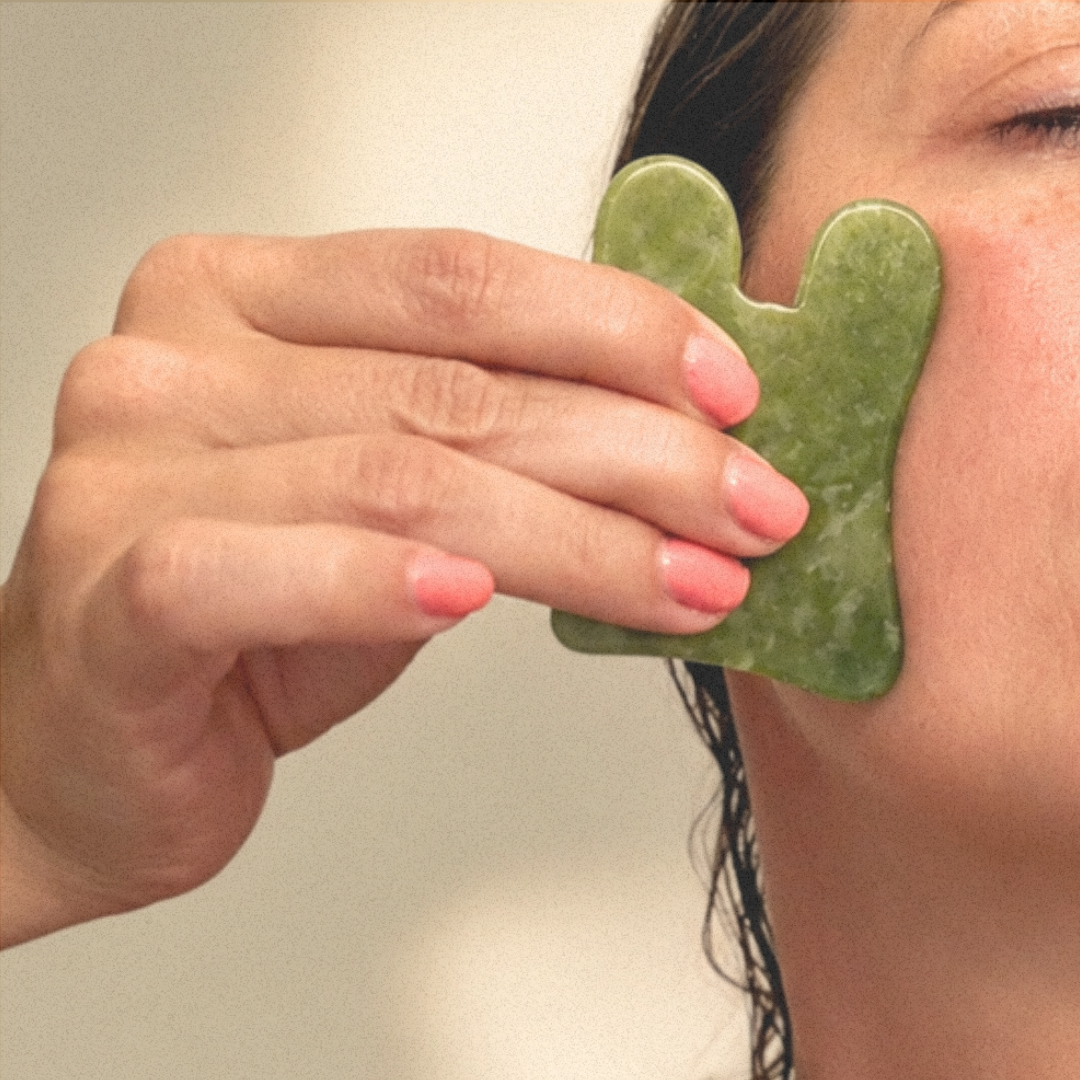
Mindful skincare is not about adding steps. It is about changing how you experience the ones you already have. Slower application, warmth between the hands, a few minutes of massage, and why the wa...


